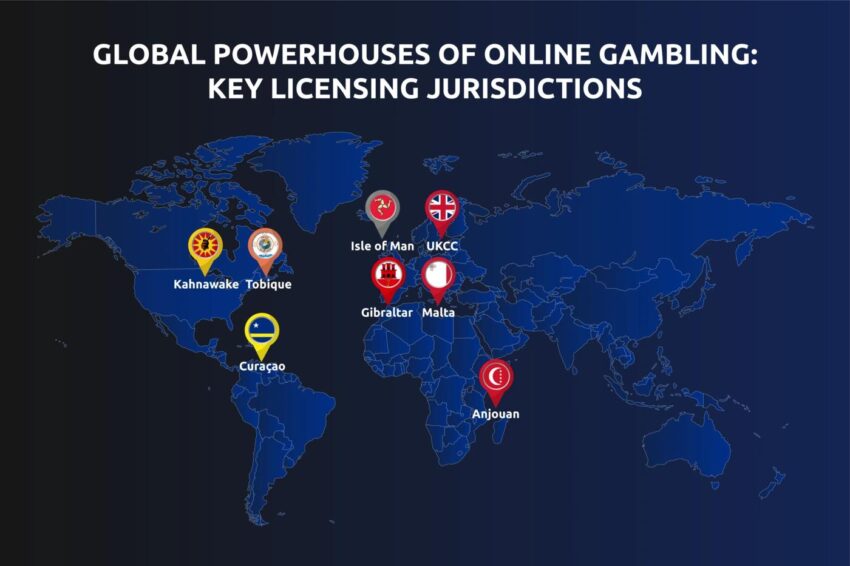
Choosing where to license an online casino is one of the most consequential decisions an operator makes. The jurisdiction you pick shapes which markets you can legally enter, how much tax you pay on gaming revenue, how quickly you can launch, and how much trust banks, payment processors, and players place in your brand.
Malta, Gibraltar, and the Isle of Man are consistently ranked among the most respected “Tier 1” licensing regimes in the iGaming industry — a step above offshore jurisdictions like Curaçao or Anjouan in credibility, but each with a very different cost structure and regulatory philosophy. This guide breaks down what each jurisdiction actually requires in 2026, so you can match the license to your business plan rather than just its reputation.
Quick Comparison Table
| Factor | Malta (MGA) | Gibraltar | Isle of Man (GSC) |
|---|---|---|---|
| Regulator | Malta Gaming Authority | Gibraltar Licensing Authority | Gambling Supervision Commission |
| Application fee | €5,000 | No separate government application fee in most cases (some advisors cite ~£10,000 for related processing) | £5,250 |
| Annual license fee | €25,000 (B2C Types 1–3); €10,000 (Type 4) | £100,000 (B2C); £85,000 (B2B support services) | £36,750 (standard OGRA license) |
| Minimum share capital | €40,000–€100,000, depending on license type | No fixed statutory minimum, but strong financial-standing checks apply | No fixed statutory minimum, but financial-standing checks apply |
| Gaming tax/duty | 5% on Malta-based player revenue (rising for some verticals from October 2026 under new legislation) | Around 1% of gross gaming revenue, capped at roughly £425,000 a year | Tiered gross gaming yield duty: about 1.5% on the first £20m, falling on higher bands |
| License term | 10 years | 5 years | 5 years |
| Typical timeline | 6–12 months | 3–6 months | 3–6 months |
| EU market access | Yes (EU member state) | No (post-Brexit; UK market access via separate UK Gambling Commission license) | No (not in EU or UK regulatory union) |
| Best suited for | Operators targeting the EU and building long-term brand credibility | Established, well-capitalized operators, especially those also targeting the UK market | Operators wanting a lighter compliance load, crypto-friendly rules, and competitive duty at scale |
Malta (MGA): The EU Gold Standard
The Malta Gaming Authority has regulated online gambling since 2004, when Malta became the first EU member state to build a full legal framework for the sector. That head start, plus continuous updates to the Gaming Act, is why an MGA license is still treated as the most globally recognized credential an online casino can hold.
Cost structure. The headline numbers are a €5,000 one-time application fee and a €25,000 annual license fee for the main B2C categories (casino games, sports betting, and peer-to-peer products), with a lower €10,000 annual fee for the Type 4 skill-games category. Layered on top is a compliance contribution calculated as a percentage of gaming revenue, plus a 5% gaming tax that applies only to revenue generated from players physically located in Malta — not your global player base. Realistically, most operators budget well beyond the headline fees once share capital (€40,000–€100,000 depending on license type), legal costs, and ongoing compliance staffing are included.
Requirements. Applicants must incorporate a Maltese company, host core infrastructure and pass a technical/RNG audit, and put named individuals through the MGA’s “fit and proper” background checks. The MGA also conducts unannounced on-site inspections, so genuine local substance (not a shell office) is expected.
Timeline. Plan for roughly six to twelve months from application to a live license, including the technical review stage.
Why choose Malta: If your business plan centers on the European market and you want a license that banks, payment processors, and game studios instantly recognize, Malta remains the benchmark. The trade-off is a longer, more paperwork-heavy process and a license fee structure where each vertical (casino, betting, poker) is approved and charged separately.
Gibraltar: Premium Cost, Premium Reputation
Gibraltar has licensed remote gambling since the early 2000s and built a reputation as a hub for large, well-established operators rather than startups. Its licensing authority is known for being selective — the Gambling Commissioner generally expects applicants to already have a track record in the industry.
Cost structure. Gibraltar’s fees are simple but high: B2C licenses (covering remote gaming, remote betting, and other remote gambling products) run £100,000 a year, while the B2B support services license is priced lower, around £85,000. In exchange, the gaming tax is genuinely light — commonly cited at around 1% of gross gaming revenue with an annual cap near £425,000, which becomes very favorable for high-volume operators.
Requirements. Gibraltar requires local incorporation, a Gibraltar-based bank account controlled by the applicant, disclosed sources of funding, and independently tested and certified games and platforms. Because Gibraltar sits outside the EU post-Brexit, it doesn’t grant EU market access on its own — operators wanting the UK market still need a separate UK Gambling Commission license, though many operators hold both.
Timeline. Typically three to six months, faster than Malta in most cases, though due diligence is thorough.
Why choose Gibraltar: It suits operators with an existing gambling track record and enough capital to absorb the £100,000 annual fee comfortably, particularly those planning high transaction volumes where the low duty cap pays for itself. It’s a weaker fit for early-stage startups.
Isle of Man: Lean Compliance, Competitive Duty at Scale
The Isle of Man’s Gambling Supervision Commission (GSC) has regulated online gambling since 2001 under the Online Gambling Regulation Act, making it one of the oldest dedicated online gambling regimes in the world. It’s often chosen by operators who want strong credibility without Malta’s compliance overhead or Gibraltar’s fee level.
Cost structure. The application fee is £5,250, with an annual license fee of £36,750 for the standard full OGRA license (the single license type covering casino, sports betting, poker, bingo, and lottery products). Gaming duty is tiered and falls as revenue grows: roughly 1.5% on gross gaming yield up to £20 million a year, dropping to 0.5% between £20 million and £40 million, and to 0.1% above that — a structure that rewards scale. There’s no VAT on gambling income and no capital gains tax.
Requirements. Operators must incorporate locally, appoint a resident Designated Official (or an Operations Manager if that person is based abroad), and — importantly — host player registration and gameplay servers physically on the Isle of Man. Player funds must sit in segregated accounts, generally with Isle of Man-based banks.
Timeline. Typically three to six months once the application is complete, similar to Gibraltar.
Why choose Isle of Man: It’s a strong middle-ground option — lower annual fees than Gibraltar, a single license type instead of Malta’s per-vertical structure, and a duty regime that gets cheaper as your revenue grows. It’s also well known for being an early and comfortable regulator for cryptocurrency-based gambling products, which some operators value.
How to Choose Between Them
- Targeting the EU as your core market? Malta is the only one of the three offering direct EU market access, which matters for payment processing and player trust across European countries.
- Already an established operator with deep capital reserves, possibly also eyeing the UK? Gibraltar’s high annual fee is easily justified by its low duty cap at real scale.
- Want a faster launch, single license type, and duty that improves as you grow — including for crypto-facilitated gaming? The Isle of Man is usually the most efficient path.
- Launching as a smaller startup with limited capital? All three are “Tier 1” jurisdictions built for well-capitalized businesses — startups with tighter budgets often start in a lighter-touch jurisdiction and migrate to Malta, Gibraltar, or the Isle of Man once revenue justifies the cost.
Frequently Asked Questions
Is a Malta license still worth it in 2026 given the higher compliance burden? For operators serious about the EU market, yes — it remains the most widely recognized license among banks and payment providers, even though it’s the most paperwork-intensive of the three.
Which of the three is cheapest to maintain annually? On headline government fees alone, the Isle of Man is the lowest of the three at £36,750 a year, well below Gibraltar’s £100,000 and roughly in line with or slightly above Malta’s €25,000, depending on the exchange rate and license type.
Can I hold licenses in more than one of these jurisdictions? Yes, and many established operators do — for example, pairing a Gibraltar or Isle of Man license with a UK Gambling Commission license to serve UK players, or holding both Malta and Isle of Man licenses to segment EU and non-EU markets.
Do these fees change often? Yes. All three regulators periodically revise fee schedules and tax rates — Malta, for instance, has gaming tax changes taking effect under new legislation later in 2026. Always confirm current figures directly with the regulator or a licensed gaming law firm before budgeting.
This article is for general informational purposes and does not constitute legal or financial advice. Licensing fees, tax rates, and requirements change periodically — always verify current figures with the Malta Gaming Authority, the Gibraltar Licensing Authority, the Isle of Man Gambling Supervision Commission, or a qualified gaming law advisor before making licensing decisions.
Also read
Tobique iGaming License Requirements: Costs, Process & Compliance