
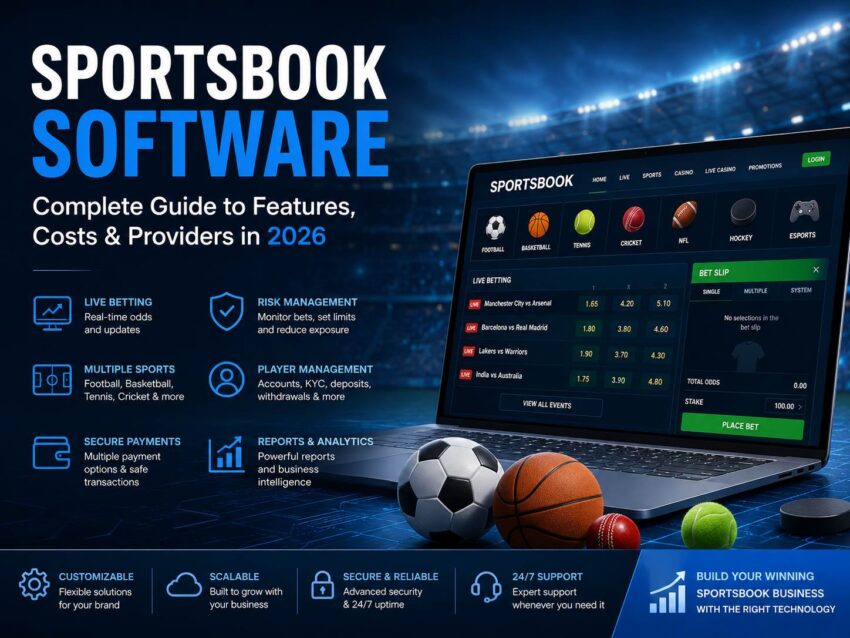
The online betting industry has become increasingly technology-driven. Behind every modern betting platform is a combination of software, data feeds, payment systems, risk-management tools, and compliance technology that allows operators to offer a smooth betting experience.
For businesses planning to launch or improve a sportsbook, choosing the right sportsbook software is one of the most important decisions. The software affects everything from how users place bets to how operators manage odds, payments, accounts, promotions, and risk.
This guide explains how sportsbook software works, what features to look for, the main pricing models, and how to evaluate a sportsbook technology provider.
What Is Sportsbook Software?
Sportsbook software is the technology used to operate an online or retail sports betting platform. It provides the infrastructure required for customers to browse sporting events, view odds, create betting slips, place wagers, manage their accounts, and track results.
For operators, the software provides administrative tools for managing markets, players, payments, bonuses, betting limits, risk, and reporting.
A modern platform may also connect with third-party services such as:
- Live sports data providers
- Odds feeds
- Payment gateways
- KYC and identity verification services
- Fraud detection systems
- Customer relationship management tools
- Affiliate platforms
- Geolocation services
The exact combination depends on the operator’s target market and business model.
How Does Online Sportsbook Software Work?
At a basic level, online sportsbook software connects customers with the betting markets offered by an operator.
When a user visits a sportsbook, they can select a sport such as football, basketball, tennis, or cricket. They can then choose a particular event and betting market.
The platform receives event and odds information from data providers or trading systems. When a customer places a wager, the software records the bet, processes the transaction, and updates the user’s balance.
Behind the scenes, several systems work together. Risk-management tools monitor betting activity, while administrative software helps operators identify unusual patterns, adjust limits, and manage exposure.
This is why sportsbook technology is much more than a simple website interface.
Important Features of Sportsbook Software
Not every platform offers the same functionality. Operators should examine the core features carefully before selecting a solution.
1. Multiple Sports and Betting Markets
A competitive sportsbook should support a broad range of sports and markets. Depending on the target audience, this could include football, tennis, basketball, horse racing, cricket, esports, and other popular events.
The platform should also make it easy to organize pre-match and live betting markets.
2. Live Betting
Live betting allows customers to place wagers while an event is taking place.
This requires fast data updates because odds can change rapidly during a match. Delays or inaccurate information can create both user-experience and risk-management problems.
For operators focusing heavily on in-play betting, the quality and speed of the underlying data infrastructure are particularly important.
3. Odds Management
Odds are central to any sportsbook. Software can connect to external odds feeds or provide tools for traders to manage prices.
Operators should understand whether odds are supplied, adjusted, or managed through an integrated trading solution and what level of control they have over the markets.
4. Risk Management
Risk management tools help operators monitor betting activity and control potential exposure.
Useful functions can include:
- Betting limits
- Stake restrictions
- Player-level monitoring
- Liability tracking
- Suspicious activity alerts
- Market-level exposure reports
Strong risk controls can help operators manage their business more effectively while protecting the platform from problematic betting patterns.
5. Player and Account Management
A sportsbook needs a reliable account-management system. Customers should be able to register, verify their identity, deposit funds, place bets, withdraw winnings, and review their transaction history.
Operators also need administrative tools for managing accounts, limits, promotions, and customer activity.
Sportsbook Management Software
Sportsbook management software provides the back-office tools used to run the betting operation.
Instead of focusing primarily on the customer-facing interface, these systems help staff manage the business behind the scenes.
Common functions include player management, betting reports, financial reporting, risk controls, bonus administration, content management, and operational analytics.
A good management system should make important information easy to understand. Clear dashboards and useful reporting can help operators make better decisions without relying on complicated manual processes.
White-Label vs Custom Sportsbook Software
Operators generally have several ways to obtain sportsbook technology.
A white-label sportsbook allows a business to launch using an existing technology platform supplied by another company. The provider generally handles much of the technical infrastructure, while the operator focuses more on branding, marketing, customer acquisition, and operations.
A custom sportsbook is developed or heavily configured specifically for the operator.
White-label solutions can offer a faster route to market and may require less technical investment. Custom development can provide greater flexibility, but it normally involves more development time, maintenance, and resources.
Neither option is automatically better. The right choice depends on budget, technical capabilities, market requirements, and the level of control an operator needs.
How Much Does Sportsbook Software Cost?
There is no single price for sportsbook software.
Costs can vary considerably depending on the provider, features, integrations, target markets, customization, and commercial agreement.
Common pricing structures may include:
- Monthly software fees
- Setup or integration fees
- Revenue-sharing arrangements
- Transaction-based charges
- Licensing fees
- Custom development costs
A low upfront price does not necessarily mean a solution is cheaper overall. Operators should consider the complete cost of running the platform, including data feeds, payment processing, compliance services, maintenance, and technical support.
How to Choose a Sportsbook Software Provider
Selecting a sportsbook software provider requires more than comparing screenshots or pricing.
Before signing an agreement, operators should investigate:
Technology: Does the platform provide the features and performance required for the intended market?
Integrations: Can it connect with payment providers, KYC services, data feeds, CRM systems, and other necessary tools?
Scalability: Can the platform handle increasing numbers of customers and betting activity?
Security: What measures are used to protect accounts, transactions, and sensitive information?
Support: Is technical support available when problems occur?
Customization: How much control does the operator have over branding, features, markets, and user experience?
Compliance: Can the technology support the licensing and regulatory requirements applicable to the target market?
These questions can reveal important differences between providers that may not be obvious from a sales presentation.
Security and Compliance Matter
Sportsbook technology handles financial transactions and sensitive customer information, so security should be treated as a fundamental requirement rather than an optional feature.
Operators should look for appropriate authentication, secure payment processing, data protection, fraud monitoring, and access controls.
Regulatory requirements also vary between jurisdictions. Licensing, KYC, responsible gambling measures, advertising rules, taxation, and data requirements may all need to be considered before launching.
The software itself cannot replace legal or regulatory advice, but it should provide the tools needed to support the operator’s compliance processes.
Final Thoughts
Choosing sportsbook software is a long-term technology decision. The right platform should provide a reliable betting experience while giving operators practical tools for managing customers, markets, payments, risk, and day-to-day operations.
Rather than choosing a provider based solely on price, operators should compare functionality, integrations, scalability, security, support, customization, and compliance capabilities.
For businesses entering the sportsbook market in 2026, taking time to evaluate these areas before committing to a platform can help avoid expensive technology changes later.
Frequently Asked Questions
Is sportsbook software only for large betting companies?
No. Different solutions are designed for businesses with different budgets, technical requirements, and operating models.
What is the difference between sportsbook software and sportsbook management software?
Sportsbook software generally covers the broader betting platform, while management software focuses more heavily on the administrative and operational tools used by the operator.
Is white-label sportsbook software cheaper than custom development?
It can reduce upfront development requirements, but the overall cost depends on licensing, revenue sharing, integrations, customization, and other provider fees.
What should operators check before choosing a provider?
Important factors include technology, market coverage, integrations, security, scalability, support, customization, pricing, and the provider’s ability to support applicable regulatory requirements.