
Introduction
Satta Matka is one of India’s most well-known forms of gambling. Although it originated several decades ago, the term continues to appear in online searches and discussions. Many people search for information about its history, terminology, and how the system developed over time.
Understanding the background of Satta Matka helps explain why it became popular and why authorities regulate or prohibit it in many places today. This article provides a factual overview of its origins, operation, legal considerations, and associated risks.
What Is Satta Matka?
Satta Matka is a gambling system that historically involved betting on randomly selected numbers. Participants placed wagers on number combinations, and winners received payouts based on the announced results.
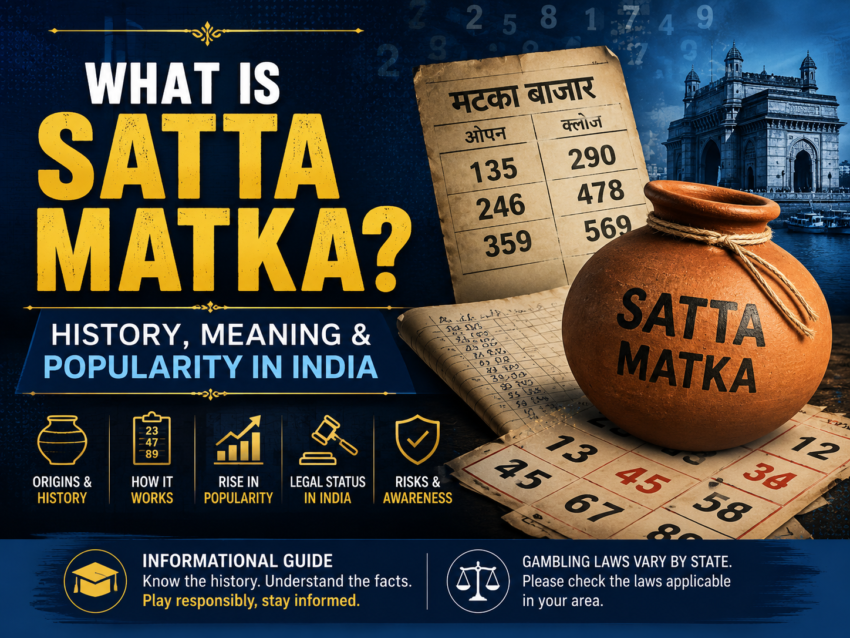
The word “Satta” generally refers to betting or wagering, while “Matka” refers to an earthen pot. In the early days, slips containing numbers were placed inside a clay pot before a winning number was drawn, giving rise to the name “Matka.”
Over time, the original physical process changed, but the name remained widely recognised.
History of Satta Matka
The origins of Satta Matka can be traced back to the 1960s.
Initially, betting revolved around the opening and closing rates of cotton traded on the New York Cotton Exchange. After this practice ended, organisers introduced number-based draws to replace the original system.
As the format evolved, various betting markets emerged under different names. These markets became known in different regions and attracted participants interested in number-based wagering.
Today, the term “Satta Matka” is commonly used as a general reference to this style of gambling rather than the original cotton-rate system.
How Did Satta Matka Become Popular?
Several factors contributed to its popularity over the years:
- Simple number-based format
- Low entry amounts
- Word-of-mouth popularity
- Expansion into different local markets
- Increased visibility through newspapers and later the internet
With the growth of digital communication, information related to Satta Matka became easier to access online, further increasing public awareness of the term.
Common Terms Associated with Satta Matka
When reading about Satta Matka, people may encounter several commonly used terms:
Open Number
The first number announced during a draw.
Close Number
The second number announced at the end of the draw.
Jodi
A two-digit number combination formed from the results.
Panel
A three-digit number combination used within the system.
These terms are commonly referenced in discussions about the history and structure of Satta Matka.
Why Is Satta Matka Considered Risky?
Like other forms of gambling, Satta Matka carries significant risks.
Financial Loss
There is no guaranteed method to predict outcomes, meaning participants can lose money quickly.
Addiction
Repeated gambling may lead to compulsive behaviour that affects personal relationships, employment, and mental health.
Illegal Activities
In many regions, unauthorised gambling activities violate local laws and may result in legal consequences.
Fraud Risks
Online platforms claiming to provide gambling-related services may not always be trustworthy, exposing users to scams or financial fraud.
Is Satta Matka Legal in India?
The legal status of gambling in India varies by state.
Many states prohibit or heavily regulate gambling under applicable laws. Some states have different rules for specific forms of gaming, while others maintain broad restrictions.
Anyone seeking legal information should consult official government resources or qualified legal professionals rather than relying solely on information found online.
Responsible Gambling Awareness
If a person chooses to participate in any legal form of gambling where permitted, responsible behaviour is essential.
Good practices include:
- Setting a strict spending limit.
- Never borrowing money to gamble.
- Avoiding gambling to recover previous losses.
- Treating gambling as entertainment rather than a source of income.
- Taking regular breaks.
- Seeking professional support if gambling becomes difficult to control.
Frequently Asked Questions
What does “Satta Matka” mean?
It refers to a historical number-based gambling system that originated in India and evolved from betting on cotton exchange rates.
Why is it called “Matka”?
The name comes from the clay pot (“matka”) that was historically used to draw numbered slips.
Is Satta Matka legal everywhere in India?
No. Gambling laws differ between states, and many forms of Satta Matka are prohibited or strictly regulated.
Can anyone predict Satta Matka results?
No. There is no verified or reliable method to consistently predict gambling outcomes.
Why do people still search for Satta Matka?
Many searches are informational, relating to its history, terminology, legal status, or cultural significance.
Conclusion
Satta Matka remains a well-known term in India because of its long history and cultural recognition. While its origins are rooted in a unique historical betting system, it is important to understand the legal restrictions and financial risks associated with gambling.
Learning about Satta Matka from an educational perspective can help readers understand its historical background, common terminology, and why responsible decision-making is important. Anyone considering gambling should first understand the applicable laws in their area and recognise that gambling should never be viewed as a reliable way to earn money.
Disclaimer
This article is published for informational and educational purposes only. It does not promote, encourage, or facilitate participation in Satta Matka or any other form of gambling. Gambling laws vary by jurisdiction, and readers should always comply with the laws applicable in their location. If gambling negatively affects your finances or well-being, consider seeking professional support.